Log in

PrimeTicker Brief · Home Service Robots · Oct 14 — Oct 21, 2026 · 40 stories analyzed

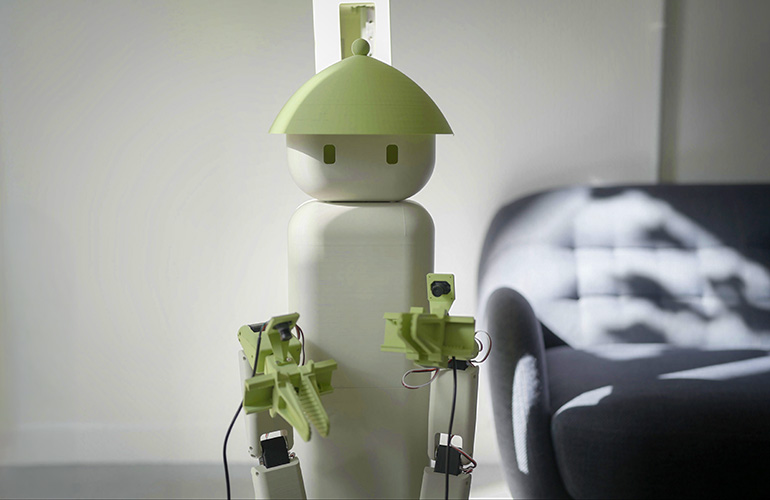
Image: uploaded by Jim Lee
🔥 Top Story
Tesla has taken a significant leap forward in the robotics industry by announcing the large-scale production of its Third-Generation Optimus Robot . This development underscores Tesla's commitment to making substantial inroads in the home service robotics market, with potential far-reaching effects on industry standards and capabilities .📈 This Week's Signals
The development of a new 7-DOF robotic arm control system represents a significant milestone. This system is designed for autonomous grasping, enabling enhanced performance in cluttered environments, which is crucial for effectively navigating and operating within household settings [Link]. Burro's CEO, Charlie Andersen, highlights the advancement in autonomous mobile robotics, indicating a shift away from reliance on engineered environments like fixed infrastructures in fulfillment centers . This evolution signals a future where robots may navigate homes with greater independence. The HemiBot brings a novel approach to robot-mediated neuro-motor rehabilitation, showcasing the potential for robots to play a critical role in healthcare, particularly for individuals with Unilateral Spatial Neglect [Link]. This represents a meaningful step in integrating robotics into therapeutic contexts. Growing concerns are being raised around the safety of AI-powered robots. Recent discussions have highlighted risks associated with large language models (LLMs) potentially making robotic systems dangerous, posing new challenges for developers in ensuring safety in consumer environments [Link].🔮 Trend Watch
The home service robot industry is witnessing a move towards greater autonomy, reducing reliance on external infrastructure for navigation and task execution. This trend reflects an industry push to refine robotic capabilities to function independently within household or similar environments. Innovations are increasingly focused on integration of AI for improved versatility and adaptability in robots, allowing them to undertake more personalized and context-specific roles in homes and healthcare settings.💡 Key Insights
- Tesla's move to mass-produce the Third-Generation Optimus Robot is a pivotal step, potentially elevating home service robotics capabilities significantly .
- The development of control systems for robotic arms that function in cluttered spaces signals a trend towards enhancing robots' versatility and adaptability in complex environments [Link].
- HemiBot's innovative approach in rehabilitation underscores the growing role of robotics in assistive healthcare technologies, paving the way for broader adoption in therapeutic practices [Link].
- Discussions around AI safety in robotics highlight the urgent need for comprehensive safety frameworks to guide the development and deployment of home service robots [Link].
🎯 Why It Matters
The evolution of home service robots affects a broad spectrum of stakeholders including developers, consumers, and healthcare professionals. This expansion into versatile, adaptable home robotics presents practical implications for how these technologies are integrated into everyday life, promising to enhance convenience and care, but also introducing new safety challenges that need to be managed carefully.📌 Notables
- Burro's commentary reflects the changing landscape in robot navigation technologies, moving away from fixed infrastructure-dependent designs .
- AI safety in robotics is becoming a critical discussion point, emphasizing the importance of strategies to mitigate potential risks of AI-powered systems [Link].
💬 Quotable
"Robots glide across polished concrete in coordinated patterns, guided by fixed infrastructure." — Charlie Andersen, CEO, BurroAI-assisted, human-reviewed. Generated by PrimeTicker from 40 feed items (models: gpt-4o-mini → gpt-4o).